
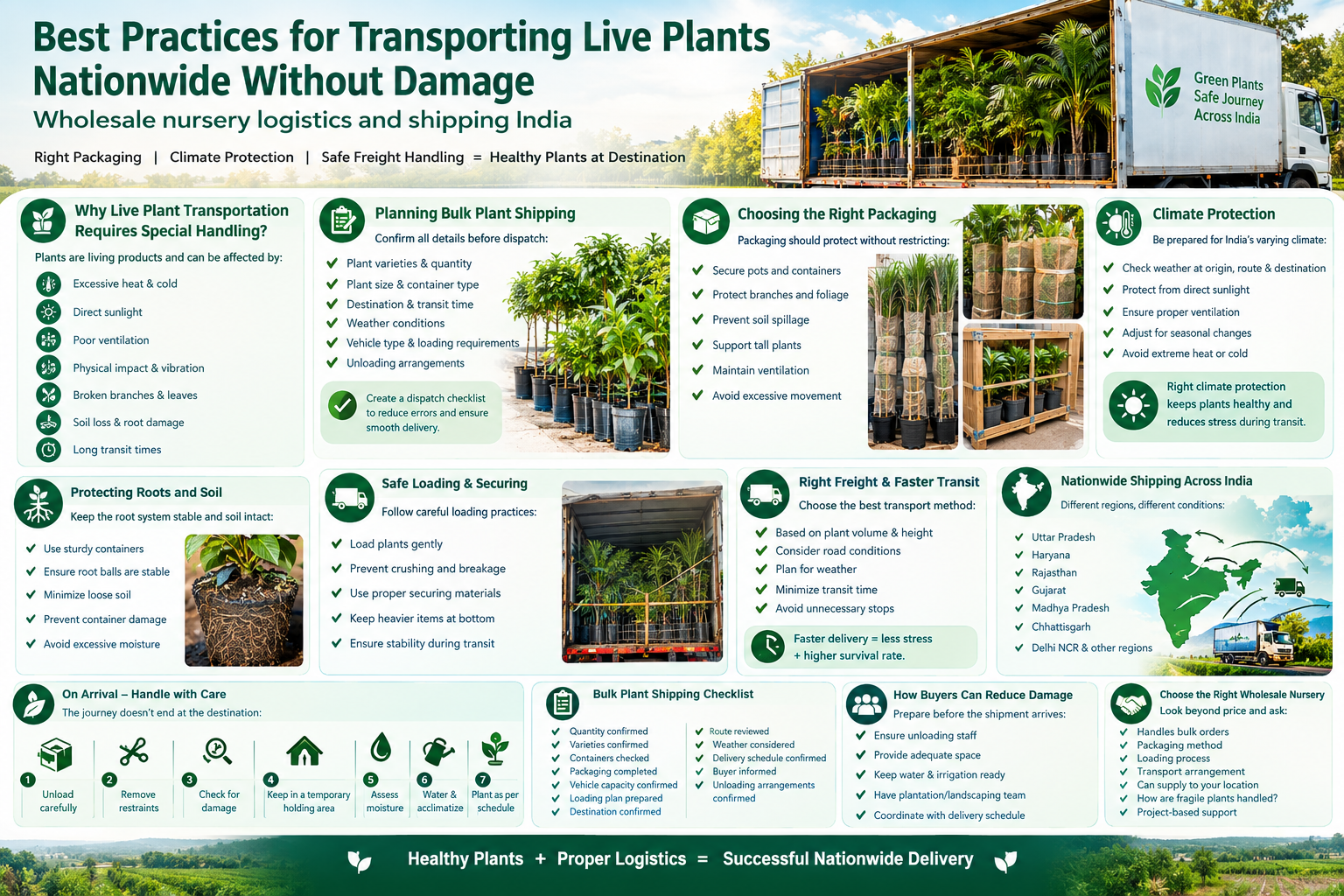
Transporting live plants across India is very different from shipping ordinary products. Plants are living products that can be affected by temperature, sunlight, humidity, handling, vibration, lack of ventilation and transportation time.
For nurseries supplying plants in bulk, proper logistics can make a major difference in plant survival and customer satisfaction. Whether the order contains ornamental plants, flowering plants, palms, shrubs, trees or plantation plants, the shipping process should be planned according to the plant type, quantity, destination and expected transit time.
A reliable wholesale nursery logistics and shipping system in India should combine suitable packaging, climate protection, careful loading, secure freight handling and proper unloading procedures.
Why Live Plant Transportation Requires Special Handling
Plants can suffer damage during transportation because of:
- Excessive heat
- Cold temperatures
- Direct sunlight
- Poor ventilation
- Physical impact
- Excessive vibration
- Broken branches
- Damaged leaves
- Root-ball movement
- Soil loss
- Container damage
- Excess moisture
- Long transit times
A plant that looks healthy when it leaves the nursery can arrive stressed or damaged if transportation is not properly managed.
This is why commercial nurseries should treat logistics as an important part of the overall bulk plant supply process.
Planning Bulk Plant Shipping Before Dispatch
Successful plant transportation starts before the plants are loaded onto the vehicle.
Before dispatching a bulk order, the nursery should confirm:
- Plant varieties
- Total quantity
- Plant size
- Pot or container size
- Root-ball condition
- Destination
- Expected transit time
- Weather conditions
- Vehicle type
- Loading requirements
- Unloading arrangements
The buyer should also be informed about the expected delivery schedule so that plants can be unloaded and watered appropriately after arrival.
For large commercial orders, it is useful to create a dispatch checklist to reduce errors.
Choosing the Right Packaging for Live Plants
Packaging should protect plants without restricting them unnecessarily.
The appropriate packaging depends on plant size, plant structure, container type and transportation method.
Common considerations include:
- Securing pots and containers
- Protecting branches
- Preventing soil spillage
- Supporting tall plants
- Protecting foliage
- Separating fragile plants
- Maintaining ventilation
- Preventing excessive movement
Plants should not be packed so tightly that leaves and branches are crushed.
At the same time, containers should be secured sufficiently to prevent them from falling or sliding during transportation.
Protecting Roots and Soil During Transportation
The root system is one of the most important parts of a live plant.
During transportation, excessive movement can disturb the root ball and cause soil to spill from containers.
Before dispatch, check that:
- Pots are structurally sound
- Soil is adequately settled
- Root balls are stable
- Containers are secured
- Loose soil is minimized
- Plants are positioned safely
For plants transported with exposed or wrapped root balls, appropriate protection should be used to reduce drying and physical damage.
Climate Protection During Plant Shipping
Temperature is one of the biggest challenges in nationwide plant transportation.
India experiences significant differences in climate between regions and seasons. A shipment travelling between northern, western, central and southern regions may encounter very different temperatures.
During hot weather, plants can experience heat stress inside poorly ventilated vehicles.
During colder periods, sensitive plants may require protection from cold conditions.
Before dispatch, consider:
- Current weather at the origin
- Weather along the route
- Weather at the destination
- Expected transit duration
- Plant sensitivity
- Vehicle ventilation
- Exposure to direct sunlight
The transportation strategy should be adjusted according to the season and plant type.
Avoiding Excessive Heat
High temperatures can cause rapid moisture loss from leaves and growing media.
To reduce heat-related stress:
- Avoid unnecessary exposure to direct sunlight before loading
- Keep plants in suitable nursery conditions until dispatch
- Ensure appropriate ventilation
- Avoid excessive crowding
- Plan transportation schedules carefully
- Reduce unnecessary delays
- Protect sensitive plants where appropriate
During extreme weather, commercial buyers and nurseries should consider whether the shipment should be rescheduled.
Managing Moisture Before Dispatch
Water management before shipping requires balance.
Plants that are excessively dry may become stressed during transit. However, excessively wet containers can become heavier and may create problems with soil movement, leakage and handling.
The appropriate moisture level depends on:
- Plant species
- Pot size
- Growing medium
- Weather
- Transit duration
- Plant condition
Nursery teams should inspect plants before loading and follow suitable horticultural practices for the particular species.
Loading Plants Safely
Loading is one of the most important stages of wholesale nursery logistics and shipping in India.
Plants should be loaded carefully to minimize:
- Broken stems
- Crushed foliage
- Fallen containers
- Root-ball disturbance
- Branch damage
- Excessive movement
Heavier and more stable items should generally be positioned so that they do not fall onto smaller or fragile plants.
Tall plants require additional attention because they can become unstable during transportation.
Securing Plants Inside the Vehicle
Plants should be secured to prevent movement during:
- Acceleration
- Braking
- Turning
- Uneven roads
- Loading and unloading
However, securing materials should not put excessive pressure on stems, branches or foliage.
The goal is to keep containers and plants stable while allowing appropriate ventilation and avoiding physical compression.
Importance of Ventilation
Live plants continue to respire during transportation.
Poor airflow combined with high temperatures and humidity can increase stress and may encourage deterioration.
For suitable shipments, maintaining adequate airflow can help reduce excessive heat buildup.
However, ventilation requirements differ between plant types, so the shipping method should be selected according to the specific plants being transported.
Choosing Freight for Bulk Plant Orders
The right vehicle depends on the size and nature of the order.
Factors to consider include:
- Total plant volume
- Plant height
- Container dimensions
- Number of plants
- Transit distance
- Road conditions
- Weather
- Loading and unloading facilities
For large B2B orders, transportation should be planned before the final dispatch date rather than arranged at the last minute.
A nursery may need to coordinate plant availability, packaging, loading space and vehicle capacity together.
Reducing Transit Time
Live plants generally benefit from efficient transportation.
Longer transit periods can increase the possibility of:
- Moisture loss
- Heat stress
- Physical damage
- Foliage deterioration
- Root stress
For this reason, commercial nursery logistics should focus on minimizing unnecessary stops and delays.
A realistic delivery schedule should account for distance, road conditions, traffic, weather and unloading arrangements.
Nationwide Plant Shipping in India
A nursery supplying plants across India may need to ship to regions with different climates and transportation conditions.
For example, shipping plants from a nursery in northern India to destinations in:
- Uttar Pradesh
- Haryana
- Rajasthan
- Gujarat
- Madhya Pradesh
- Chhattisgarh
- Delhi NCR
- Other parts of India
can involve different transit distances and environmental conditions.
The nursery should evaluate each shipment individually instead of using exactly the same packaging and transportation method for every destination.
Handling Plants at the Destination
Transportation does not end when the vehicle reaches the destination.
The unloading process is equally important.
Buyers should:
- Unload plants carefully.
- Remove transportation restraints appropriately.
- Check containers and foliage for damage.
- Place plants in a suitable temporary location.
- Assess moisture conditions.
- Follow appropriate watering and acclimatization practices.
- Plant or relocate them according to the project schedule.
Plants that have travelled long distances may require appropriate recovery time before being exposed to demanding environmental conditions.
Bulk Plant Shipping Checklist
Before dispatching a commercial order, a nursery can use the following checklist:
- Plant quantity confirmed
- Plant varieties confirmed
- Plant sizes checked
- Containers inspected
- Root balls stabilized
- Packaging completed
- Plants protected from physical damage
- Vehicle capacity confirmed
- Loading plan prepared
- Destination confirmed
- Transit route reviewed
- Weather conditions considered
- Delivery schedule confirmed
- Buyer informed
- Unloading arrangements confirmed
This simple process can reduce avoidable logistics problems.
How Buyers Can Reduce Plant Transportation Damage
Plant damage is not only the responsibility of the nursery.
The buyer should also prepare for delivery.
Before the shipment arrives, make sure that:
- Unloading staff are available
- Adequate space is available
- Plants can be moved safely
- Temporary holding space is ready
- Appropriate irrigation facilities are available
- Plantation or landscaping teams are prepared
For very large orders, the unloading and planting schedule should be coordinated with the delivery date.
How to Choose a Wholesale Nursery for Bulk Plant Shipping
When selecting a wholesale nursery logistics and shipping partner in India, buyers should look beyond plant prices.
Important questions include:
- Does the nursery handle bulk orders?
- How are plants packaged?
- How are plants loaded?
- What plant sizes are available?
- How is transportation arranged?
- Can the nursery supply plants to the required location?
- How are fragile plants handled?
- What information is provided before dispatch?
- Can the nursery coordinate project-based orders?
A supplier with an organized bulk shipping process can make large-scale plant procurement easier.
Why Proper Logistics Matters for B2B Plant Suppliers
For B2B customers, plant transportation is part of the overall purchasing experience.
A landscaper receiving damaged plants may face:
- Replacement requirements
- Additional labour
- Project delays
- Increased costs
- Plantation schedule changes
Good logistics can help reduce these risks.
For a commercial nursery, investing in proper packaging, trained handling, suitable transportation and clear communication can strengthen long-term relationships with B2B buyers.
Conclusion
Transporting live plants across India requires more planning than shipping ordinary products. Plants must be protected from physical damage while also receiving appropriate consideration for temperature, moisture, ventilation and transit time.
For commercial nurseries, a successful wholesale nursery logistics and shipping system in India should begin with proper order planning and continue through packaging, loading, freight handling, delivery and unloading.
Whether the order contains a few hundred plants or a large commercial shipment, the basic principle remains the same:
Healthy plants + suitable packaging + climate protection + careful handling + efficient transportation = safer bulk plant delivery.
By following appropriate logistics practices and coordinating closely with buyers, commercial nurseries can improve the chances of plants reaching their destination in suitable condition and help B2B customers keep their landscaping, plantation and development projects on schedule.
Frequently Asked Questions
How are live plants transported safely in bulk?
Live plants are transported by using suitable packaging, stable containers, appropriate loading methods, adequate ventilation and careful freight handling. The exact method depends on plant type, size, quantity, weather and transit duration.
How do you protect plants from heat during transportation?
Heat protection may involve suitable scheduling, ventilation, avoiding unnecessary exposure to direct sunlight and selecting transportation methods appropriate for the plant species and weather conditions.
How should plants be packed for long-distance shipping?
Plants should be packed to protect roots, containers, stems and foliage while avoiding excessive compression. Containers should be stabilized and fragile plants should receive additional protection where necessary.
What is important when shipping plants across India?
Important factors include plant type, quantity, plant size, packaging, weather, transit time, vehicle selection, loading, route planning and unloading arrangements.
Can a wholesale nursery supply plants to different states?
Many commercial nurseries can arrange bulk plant supply to different regions depending on their inventory and logistics network. Buyers should confirm delivery feasibility, transportation arrangements and costs before ordering.
What should buyers do when bulk plants arrive?
Plants should be unloaded carefully, inspected for transportation damage and placed in suitable conditions. Watering, acclimatization and planting should then be handled according to the requirements of the particular plants.